
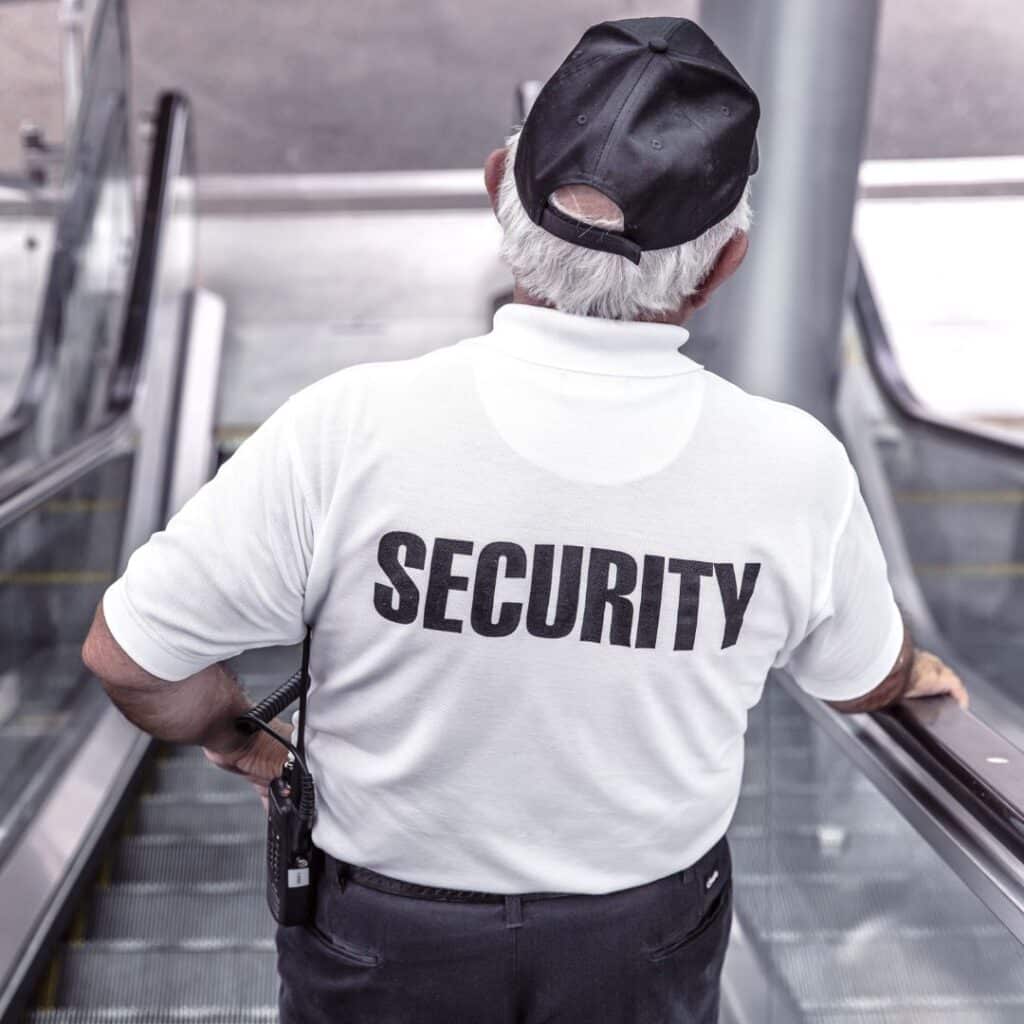
If you’ve ever walked into a bank or attended a large event, you may have noticed a security guard standing off to the side. Maybe the first thing you noticed was the uniform, the utility belt, or the steady presence. But as you glance a little closer, a thought creeps in: “Are they armed? Can security guards carry guns? How safe am I, really?” It’s a great question to ask, and it’s one that we get asked a lot.
As a veteran-owned private security company in Colorado Springs, Pikes Peak Security brings more than 18 years of military and law enforcement experience to the table. Our team understands the legal, ethical, and practical realities of firearm use in the security industry.
In this guide, we’ll explain when security guards can carry guns — and when an armed presence isn’t necessary at all.
Understanding the Legal Framework
So, can security guards carry guns? The short answer is: yes. But only under strict conditions. Security officers must meet additional requirements beyond the standard license to serve as armed security personnel. These include:
- Passing criminal background checks.
- Completing state-approved firearms training.
- Securing a special license as a licensed security officer.
- Ongoing annual re-qualification with firearms.
Every state has its own legal regulations for security guards, so it’s important to note that not all security officers will be under the same regulations.
Can Security Guards Carry Guns in Colorado?
Yes, but not without strict oversight. In Colorado, security guards carry guns only if they complete specialized training, pass rigorous vetting, and receive the proper licenses. This isn’t the same as having a civilian concealed carry permit. Even if a guard holds one, they must still earn separate authorization to work as an armed security professional.
Colorado law requires security officers to re-qualify regularly, demonstrating that their skills and judgment meet professional standards. This ongoing process helps ensure that only highly trained individuals are trusted to carry firearms in the line of duty.
These safeguards aren’t meant to create hurdles; they exist to protect the public, the client, and the guard themselves. By holding armed security to higher standards, Colorado ensures that when firearms are involved, they’re in the hands of those prepared to use them responsibly.
Armed vs. Unarmed Security Guards
Not every situation calls for a firearm. In fact, most security professionals are unarmed. Their primary responsibilities follow the “detect, deter, observe, and report” model, which emphasizes visibility and vigilance rather than confrontation.
Unarmed officers often handle:
- Access control
- Surveillance monitoring
- Site patrols
- Customer service duties
- Basic incident response
While unarmed, they still may perform a citizen’s arrest in certain scenarios until law enforcement arrives.
Armed security guards, on the other hand, are licensed to carry firearms and are typically assigned to higher-risk environments. These might include:
- Financial institutions
- Cannabis businesses
- Construction sites with valuable equipment
- Events with large crowds
The decision between hiring armed vs. unarmed security depends on the specific risks and needs of a business or property.
Types of Firearms Security Guards Can Carry
When people ask, “can security guards carry guns,” they’re often curious about what kinds of firearms are actually used in the industry. While handguns are the most common choice, other options may be authorized depending on the assignment. Here are the most typical firearm types carried by armed security guards — and why.
Handguns
The majority of security guards who carry firearms use handguns because they are reliable, easy to train with, and quick to draw in emergencies. Common models include:
- Glock 22 – Popular for its power and durability, widely used in law enforcement.
- SIG Sauer P226 – Trusted for accuracy and reliability.
- Ruger Security-Six – Known for its strong revolver design and simplicity.
Shotguns
Some armed guards may be authorized to use shotguns, especially for protecting large properties or in specialized assignments. Shotguns offer a wider shot pattern, making them effective in close-range scenarios.
Rifles
Less common, but in high-security environments such as armored transport or critical infrastructure, rifles may be used by specially trained guards. These require the highest level of licensing and training.
Training & The Use of Force Continuum
Training is the biggest factor that separates unarmed and armed roles. Any licensed security officer authorized to carry guns must be trained in the use of force continuum. This structured system guides decision-making, emphasizing:
- Presence and verbal warnings.
- Non-lethal responses (such as hand restraints).
- Escalation only when necessary.
- Firearms as a last resort.
So, in circumstances when security guards carry guns, de-escalation tactics are prioritized and they only resort to force when lives are at risk.
Common Myths About Armed Security
Myth: All security guards carry guns.
False. The majority of guards are unarmed and rely on visibility, reporting, and rapid law enforcement coordination.
Myth: Armed guards don’t need much training.
False. Armed guards are some of the most highly trained, undergoing extensive firearms certification and requalification.
Myth: Armed security is always better.
False. For many businesses, unarmed guards are safer, cost-effective, and fully capable of protecting property.
Final Verdict
So, can security guards carry guns? Yes, but only if they are licensed, trained, and authorized by the state. While armed guards are essential in certain industries, most businesses benefit from the presence of professional unarmed officers who detect, deter, observe, and report.
At Pikes Peak Security, we go above and beyond Colorado’s minimum requirements, with over 100 hours of annual training for our guards. Whether you need reliable access control, event security, or fully licensed armed security, we’re here to protect what matters most.
Contact Pikes Peak Security today to discuss whether armed or unarmed security is right for your business in Colorado Springs and across the Front Range.
Frequently Asked Questions
Do most security guards carry guns in Colorado?
Yes, but we wouldn’t say “most”. Guards only carry in Colorado if they are fully licensed and required by the business to carry. All guards must undergo rigorous firearms training, pass background checks, and meet state-specific requirements.
What types of guns can armed security guards carry?
Most carry handguns such as the Glock 22, SIG Sauer P226, or Ruger Security-Six. In some cases, specially trained guards may carry shotguns or rifles.
What’s the difference between a licensed security officer and a police officer?
A licensed security officer is trained to protect property and people within private settings, while police officers enforce laws and have broader authority, including making arrests and conducting investigations.
Can private security companies arrest someone?
Yes, in certain circumstances, security guards may perform a citizen’s arrest. However, they must immediately notify law enforcement and follow legal protocols.
How much training do armed security guards need?
Armed guards must complete state-mandated firearms training and requalification. At Pikes Peak Security, our team receives more than 100 hours of additional annual training to exceed industry standards.