Parents often ask, “what is a school resource officer?” They’re not just “school cops”, and they’re not just there to stand guard at the entrance. A school resource officer (SRO) is a sworn law enforcement officer who’s responsible for safety and crime prevention in schools. They are employed by a local police or sheriff’s department and work in close cooperation with school leadership to make campuses safer for students, teachers, and staff.
The quick answer: an SRO is a dedicated, on-campus partner in safety who handles law enforcement, community policing, student mentorship, and emergency management. They’re not just there to “police.” They’re educators, mentors, and emergency planners rolled into one.
In this guide, we’ll break down:
- What SROs do (and what they don’t do)
- How they differ from school-based security personnel
- What SRO programs look like in Colorado Springs
A Brief History of SRO Programs
- The first SRO program began in Flint, Michigan, in 1953 as part of a community policing initiative to improve youth–law enforcement relationships.
- After incidents like Columbine (1999) and Sandy Hook (2012), federal grants expanded SRO programs nationwide.
- By the mid-2000s, the U.S. government had funded more than 7,000 SRO positions across the country.
- Today, about half of U.S. public schools have a dedicated SRO, reflecting an ongoing effort to improve school safety and violence prevention.
The Role of School Resource Officers
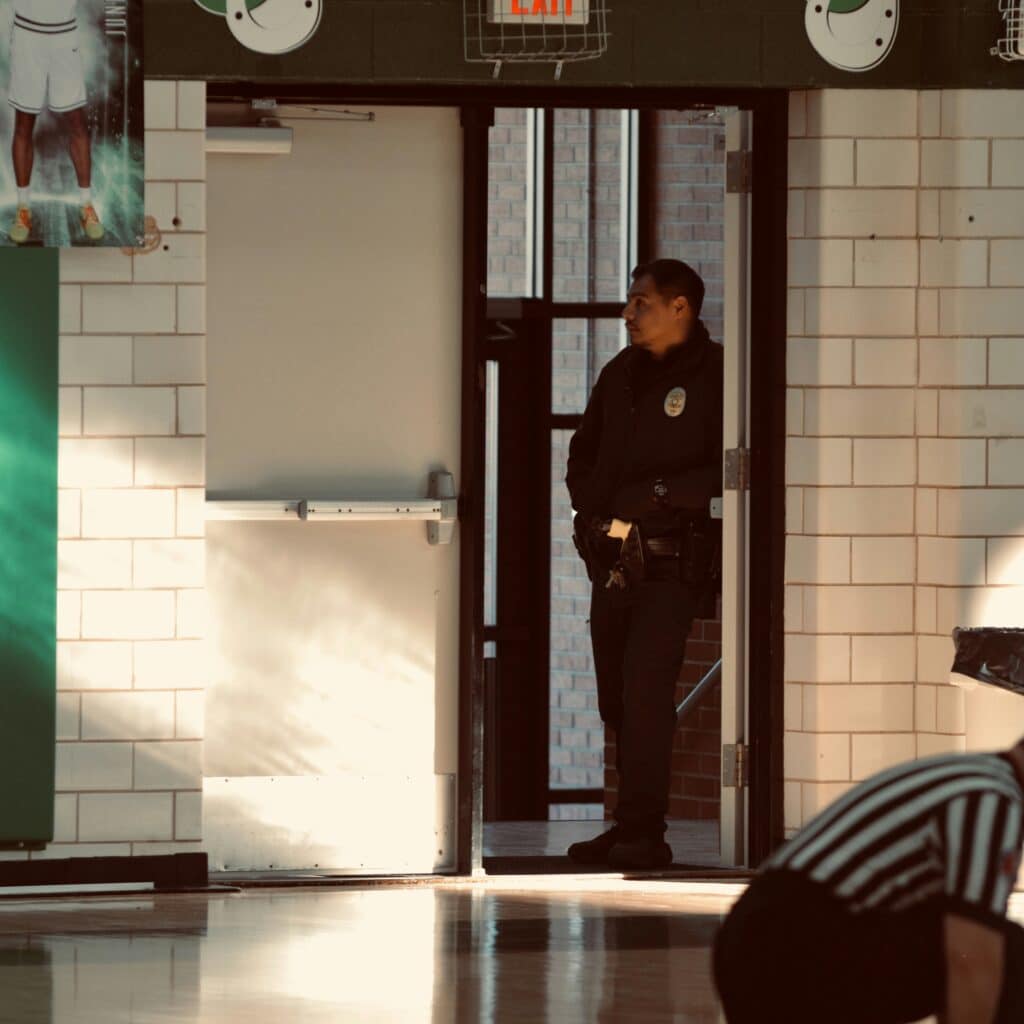
The United States Department of Justice defines school resource officers as “law enforcement officers responsible for safety and crime prevention in schools.” SROs are sworn law enforcement officers assigned to protect schools, prevent criminal activity, and strengthen relationships between police, staff, and students.
In Colorado Springs, the CSPD School Resource Officer Unit assigns officers to five school districts. These officers are trained in crisis management, threat assessment, and community policing. Their presence isn’t about punishment; it’s about preparation, prevention, and partnership. They help schools identify risks, respond to incidents quickly, and build safer environments through daily interaction and ongoing safety education.
The National Association for School Resource Officers (NASRO) describes an SRO’s job as three parts: educator, mentor, and law enforcement officer. The Department of Justice adds a fourth: emergency planner. SROs develop emergency response plans, lead lockdown drills, and coordinate threat assessment teams that include administrators and mental health staff. They make sure schools are ready for everything from everyday disruptions to major emergencies.
Armed vs. Unarmed School Security Officers
One key consideration in school security planning is whether to employ armed or unarmed security officers. Each approach offers unique advantages, and the right choice depends on a school’s size, location, and risk profile.
Armed School Security Guards:
- Provide immediate response capabilities in high-risk scenarios
- Are often former law enforcement or military personnel
- Complete extensive firearms safety and legal-use-of-force training
- Can serve as a visible deterrent to potential threats
Unarmed School Security Guards:
- Offer a less intimidating presence, ideal for elementary or community-focused settings
- Prioritize de-escalation, communication, and student engagement
- Coordinate closely with SROs and local police when incidents occur
Some districts choose a hybrid model, employing unarmed officers for day-to-day supervision while retaining armed SROs for emergency readiness. Whatever the model, the shared goal remains the same: to keep students safe without compromising the welcoming atmosphere schools strive to maintain.
SROs vs. Private School Security
SROs and private security professionals both strengthen school safety, but their authority and focus differ:
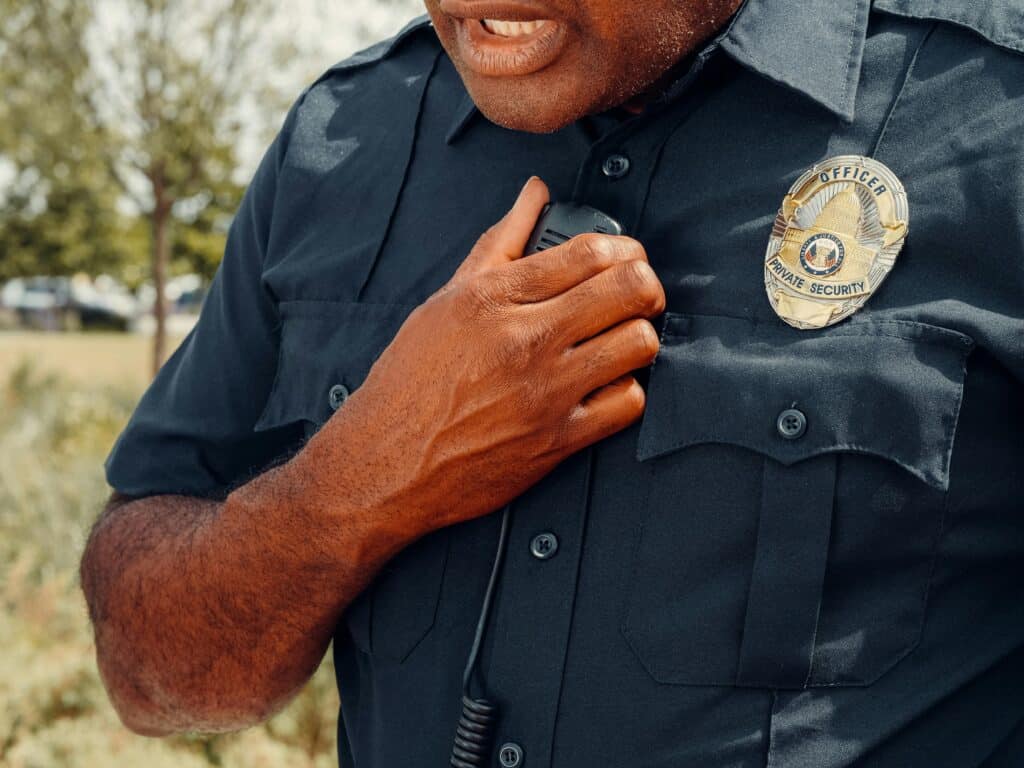
- SROs are sworn law enforcement officers with full arrest powers. They handle criminal incidents, conduct investigations, and enforce state and federal laws.
- Private security officers are non-sworn personnel who focus on prevention, supervision, and support tasks, such as access control, patrol, visitor management, and event security.
In short: SROs are a branch of law enforcement. Private security maintains order and visibility.
School Security Guards
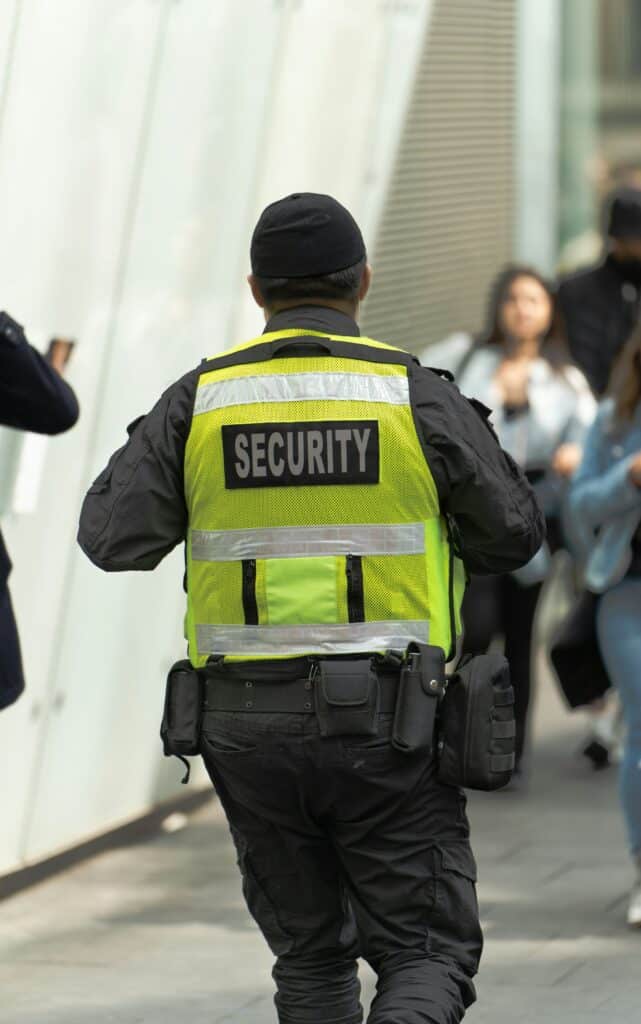
While SROs serve as sworn law enforcement officers, many schools also employ school security guards who focus on prevention, monitoring, and rapid response. These professionals are not sworn police officers, but they are trained safety personnel who play a vital role in keeping schools secure.
Typical responsibilities include:
- Monitoring entrances, hallways, and parking lots for suspicious activity
- Controlling visitor access and verifying identification
- Responding to fights, disturbances, or unauthorized visitors
- Supporting teachers and administrators during lockdowns or drills
- Reporting incidents and coordinating with SROs or local law enforcement
Training and Qualifications:
Most school security guards complete state-approved security training, CPR/first aid certification, and specialized courses in de-escalation, behavioral awareness, and youth communication. Many also participate in mental-health awareness and emergency preparedness programs to ensure they can respond effectively in high-stress environments.
How Colorado Springs is Using SRO Programs
Colorado Springs has one of the strongest school resource officer programs in the state. The Colorado Springs Police Department (CSPD) partners with five districts through formal Memorandums of Understanding (MOUs) that outline:
- When SROs should intervene in criminal matters
- The difference between criminal and disciplinary issues
- Collaborative procedures with administrators and counselors
- Required training in juvenile justice, cultural awareness, and de-escalation tactics
Trusted Help from Local SROs
At Pikes Peak Security, we’re committed to protecting our local schools and the children of our community. Our team includes credentialed, law enforcement-trained professionals who meet the qualifications to serve as school resource officers. We bring the same level of accountability, training, and professionalism you’d expect from a public SRO unit, all with the flexibility and responsiveness of a private security firm.
Our services include:
- On-campus protection from certified, armed or unarmed officers
- Crisis response and emergency planning tailored to your school’s needs
- Visitor screening, access control, and perimeter monitoring
- Event and athletic security with a community-first approach
- Threat assessment participation and safety training for staff
Whether your district needs a dedicated SRO, temporary coverage, or additional protection to strengthen existing programs, our team is here to help. Contact us today to learn more and get a quote.
Frequently Asked Questions About School Resource Officers
What is a school resource officer?
A school resource officer (SRO) is a sworn law enforcement officer assigned to a school to handle safety, crime prevention, and emergency response while building positive relationships with students and staff.
Are SROs the same as regular police officers?
Yes. School resource officers are sworn law enforcement officers with the same authority as city or county police.
Do all Colorado Springs schools have SROs?
No. SRO assignments depend on district partnerships and funding through CSPD.
Can private security replace SROs?
No. Private security can supplement safety operations but cannot perform law enforcement duties.
Who supervises SROs locally?
They report to the CSPD SRO Unit and coordinate with principals and district safety teams.
Are school resource officers real cops?
Yes. Every SRO is a certified law enforcement officer who has completed police academy training and holds full arrest powers.
What are the requirements to be an SRO?
To serve as a school resource officer, candidates must first be sworn police officers, then complete specialized SRO training that covers juvenile law, crisis intervention, and school safety procedures.
Do SROs carry guns?
Yes. Because SROs are active law enforcement officers, they are typically armed while on duty, following the same safety and use-of-force policies as their department.